

Proxy for AI Agents: A Practical Guide to Reliable, Secure Agentic Networking
Learn how to design proxy infrastructure for AI agents with the right session strategy, reliability controls, security boundaries, and compliance safeguards.
Learn how to design proxy infrastructure for AI agents with the right session strategy, reliability controls, security boundaries, and compliance safeguards.
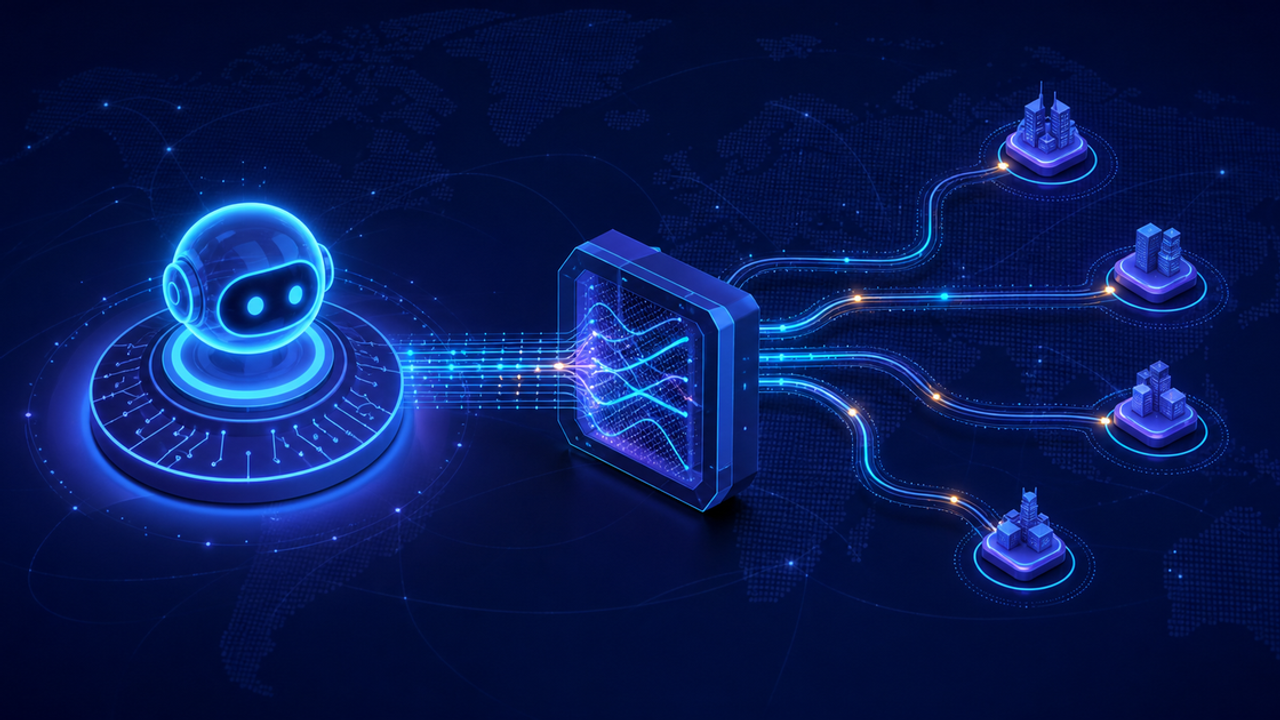
AI agents do more than generate text. When equipped with tools, they can fetch data, call APIs, and operate browsers. A proxy can give those network actions a controlled path to the internet, but it should be treated as infrastructure—not as a shortcut around access controls.
A forward proxy sits between an agent runtime and the destination it needs to reach. The agent sends HTTP, HTTPS, or SOCKS traffic to the proxy; the proxy then connects to the destination on the agent’s behalf. For HTTPS, the HTTP CONNECT method can establish a tunnel through an intermediary.
A proxy does not automatically make an agent anonymous, compliant, or reliable. The destination can still observe browser fingerprints, account behavior, cookies, request patterns, and application-level identifiers.
Agents can call tools repeatedly and may act on unexpected or manipulated input. OpenAI’s Agents SDK documentation describes tools as the mechanism that lets agents fetch data, call APIs, run code, or use a computer. OWASP’s guidance on excessive agency warns that broad tool access can turn ambiguous or manipulated model output into damaging actions.
That makes network routing a policy decision. A good proxy layer answers four questions before a request leaves your environment:
A production design usually separates decision-making from transport. The agent chooses an approved browser or HTTP tool; an egress policy service validates the destination, task, and tenant; a proxy gateway selects an upstream exit using a routing key; and metrics return to the orchestrator without exposing proxy credentials to the model.
Use a stable routing key such as tenant_id + workflow_id + session_id. This keeps network identity deterministic while letting the orchestration layer retry or resume a job. Keep proxy usernames and passwords in a secret manager, inject them only at runtime, and never place them in prompts, traces, screenshots, or tool output.
The proxy is a transport and policy boundary. It is not a CAPTCHA bypass, an authorization bypass, or permission to ignore a site’s terms.
Datacenter exits are usually the first choice for API calls, public datasets, testing, and high-throughput tasks. They are fast, economical, and easy to monitor. They may be unsuitable when a destination legitimately requires consumer-network fidelity or when its risk controls classify shared hosting ranges differently.
Static ISP exits combine a stable address with an ISP-associated network. They can fit long-lived, authorized sessions that need consistent location and identity. Treat them as scarce session resources and monitor account-to-IP affinity.
These should be reserved for lawful use cases that genuinely need end-user network characteristics, such as consented localization testing or regional QA. Provider provenance, user consent, jurisdiction, retention, and acceptable-use controls matter more than raw pool size.
Rotation is useful for independent, stateless jobs. Sticky sessions are better for login flows, carts, multi-step forms, and any workflow in which cookies or server-side risk signals expect continuity. Rotate between tasks, not in the middle of a transaction.
Proxy rotation alone does not create reliability. Build a feedback loop around each exit:
Do not retry authentication failures, policy denials, or deterministic validation errors through a succession of new IPs. That hides the real problem and can amplify abuse.
Playwright supports HTTP(S) and SOCKSv5 proxies globally or per browser context. Per-context configuration is useful when multiple agent sessions share a browser process but require isolated cookies and routes.
import { chromium } from "playwright";

const browser = await chromium.launch();
const context = await browser.newContext({
  proxy: {
    server: process.env.PROXY_SERVER!,
    username: process.env.PROXY_USERNAME,
    password: process.env.PROXY_PASSWORD,
  },
});

try {
  const page = await context.newPage();
  await page.goto("https://example.com", {
    waitUntil: "domcontentloaded",
    timeout: 30_000,
  });
} finally {
  await context.close();
  await browser.close();
}
Keep one browser context per logical session. Do not share cookies across customers, and do not let the model choose arbitrary proxy endpoints or credentials.
Network controls should reduce the impact of prompt injection and tool misuse:
These controls complement model guardrails. They remain effective even when the model makes a poor decision.
Before automating a destination, document the business purpose, authorization, applicable terms, rate limits, data rights, and geographic restrictions. For crawler-like behavior, evaluate the site’s published policies and the Robots Exclusion Protocol. robots.txt is not a substitute for permission or law, but it is a standardized signal that automated clients should process correctly.
NIST’s AI Risk Management Framework organizes risk work around Govern, Map, Measure, and Manage. Applied to agent networking, that means naming an owner, mapping destinations and data flows, measuring failures and impact, and maintaining a response plan.
The best proxy for an AI agent is not simply the largest IP pool. It is the one that fits the workflow’s identity and locality needs, exposes measurable reliability, supports least-privilege credentials, and gives operators enforceable policy controls. Start with a small allowlisted architecture, make session behavior explicit, and expand only after the metrics and governance are in place.