

What a dynamic residential proxy changes
A proxy is an intermediary selected by the client to forward requests. In the proxy market, “dynamic residential” usually describes a service that routes traffic through residential network resources and can change the exit IP according to a rotation policy. The product name is not an IETF protocol category, so the session controls and targeting options matter more than the label alone.
MIYAIP currently presents its dynamic residential product as a pool of 100M+ residential IP resources across 190+ countries and regions. The product page lists country, city, and ASN targeting, rotating and sticky session modes, and HTTP(S) and SOCKS5 access. Availability still depends on the live pool and the selected conditions.
From one gateway to the right residential exit
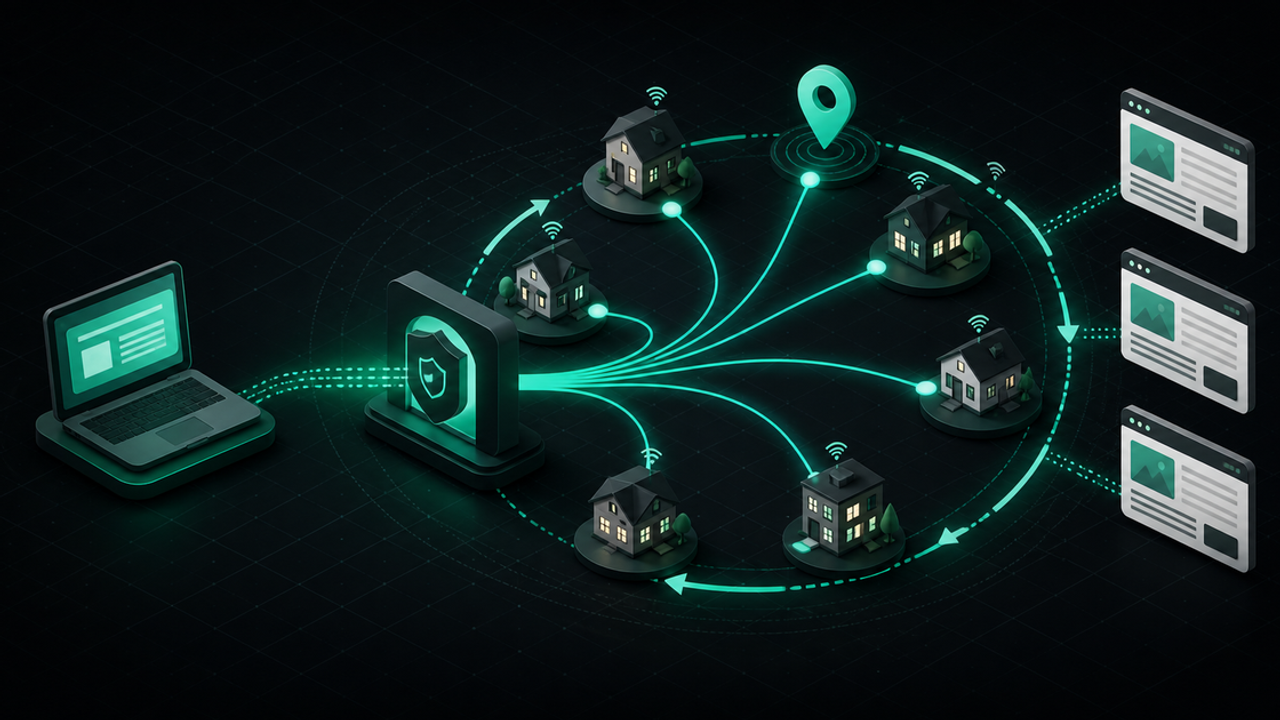
Your application authenticates with the MIYAIP gateway instead of connecting directly to every residential node. The gateway applies the requested location and session policy, selects an eligible residential exit, and relays the request to the public destination.
A rotating policy can distribute independent requests across different exits. A sticky policy asks the gateway to keep one exit for a controlled session window, which is useful when a multi-step workflow needs continuity.
The same gateway pattern keeps credentials and routing policy in one place, but it does not remove the need for timeouts, retries, rate limits, and application-level observability.
Rotation and sticky sessions solve different jobs
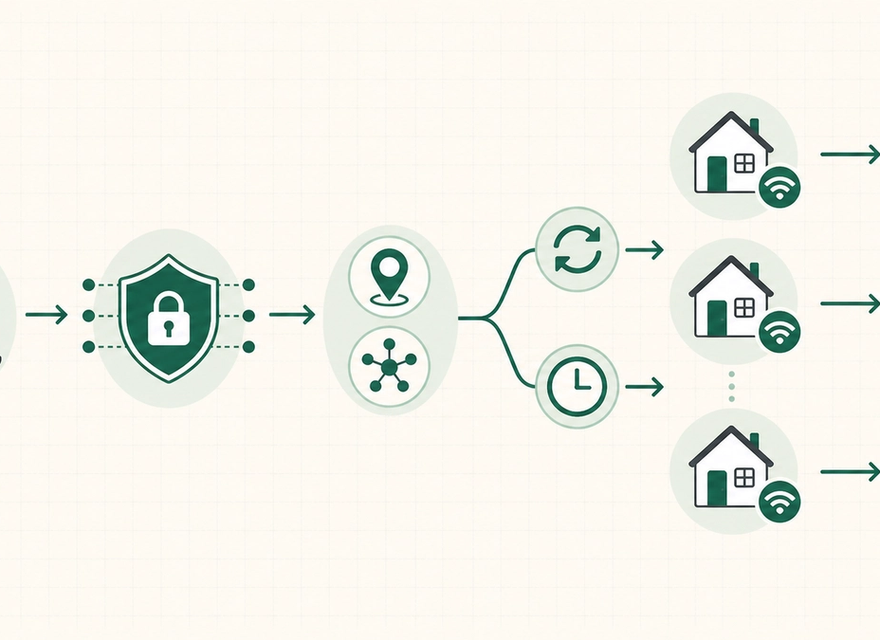
Choose the session policy from the unit of work. Rotation is a good default for independent fetches that benefit from address diversity. Sticky sessions are better when several authorized requests must share one temporary identity, such as a localized browsing flow or a multi-page verification sequence.
Decision | Rotating session | Sticky session |
|---|---|---|
Best fit | Independent pages, broad monitoring, parallel collection | Multi-step flows, temporary continuity, localized verification |
Main benefit | IP diversity between requests or request groups | A consistent exit during a controlled window |
Watch for | More state changes and variable node behavior | Session expiry, unavailable exits, and state leakage between jobs |
A practical, controlled setup
- Define the target first. Record the authorized domains, expected request volume, required region, and whether the task needs independent requests or a continuous session.
- Choose targeting conservatively. Start with country-level routing, then add city or ASN conditions only when the task genuinely needs them and the live pool supports them.
- Select rotating or sticky behavior. Do not use sticky sessions by habit; reserve them for workflows that require continuity.
- Generate the gateway credentials in Proxy Setup and keep them in a secret manager or environment variable. Never place production credentials in source code, logs, screenshots, or support tickets.
- Test a small sample against an endpoint you are authorized to access. Capture latency, response status, exit location, retry count, and traffic usage before scaling.
import os
import requests

proxy_url = os.environ["MIYAIP_PROXY_URL"]
proxies = {"http": proxy_url, "https": proxy_url}

response = requests.get(
    "https://example.com/health",  # replace with an authorized endpoint
    proxies=proxies,
    timeout=20,
)
response.raise_for_status()
print(response.status_code)
For HTTP(S) clients, the proxy participates in HTTP forwarding or tunneling behavior described by HTTP semantics. SOCKS5 is a separate relay protocol standardized in RFC 1928. Pick the protocol your client actually supports, and test DNS behavior, authentication, and timeout handling in that client.
Frequently asked questions
How is MIYAIP dynamic residential traffic billed?
The current MIYAIP product FAQ says billing is based on total uploaded and downloaded traffic. Review the current checkout page before purchase because commercial terms can change.
Can I keep the same residential IP?
A sticky-session setting can request one exit for a controlled session window. It is not a permanent dedicated-IP guarantee, and the exact duration or availability can vary with the selected service and live network conditions.
Which targeting options are available?
MIYAIP currently lists country and city targeting, with ASN and other advanced options where the live pool supports them. Start broad and narrow only when the workflow requires it.
Are dynamic residential proxies always the best choice?
No. They are useful when location diversity or residential routing matters. A static residential, datacenter, or other proxy model may be simpler when the task prioritizes a stable long-lived exit, predictable infrastructure, or a different billing model.
Configure a dynamic residential route for your authorized workflow
Review the product capabilities, choose a session policy, and validate a small request sample before increasing traffic.
Sources
MIYAIP Dynamic Residential Proxy — product capabilities and setup flow; accessed August 5, 2026.
MIYAIP Proxy Setup and Billing FAQ — billing and session guidance; accessed August 5, 2026.
MIYAIP: Dynamic Residential, Static Residential, and Datacenter Proxies — terminology and operating trade-offs; published July 15, 2026.
RFC 9110: HTTP Semantics — HTTP intermediaries and proxy terminology; published June 2022.
RFC 1928: SOCKS Protocol Version 5 — SOCKS5 protocol behavior; published March 1996.
RFC 9309: Robots Exclusion Protocol — crawler controls and their authorization limitation; published September 2022.